

The best hour to understand a lakefront property in Lake Lure is the one most buyers never see. By the time someone drives in from Charlotte or Atlanta and meets me at a listing, it’s usually early afternoon — sun high, boats out, a little chop on the water. That’s a fine time to tour a house. It tells you almost nothing about what it’s like to live on this lake. For that, you’ve got to be here at first light.
I’ve started more mornings on this water than I can count, usually with a camera in hand. Lake Lure is man-made — the dam went up in 1927 and flooded the valley floor, which is why the shoreline folds into all these narrow coves instead of running in a clean line. Those coves matter at dawn. They hold the mist. On a still morning in late spring the fog doesn’t lie evenly across the lake; it pools in the low coves and burns off the open water first, so you’ll watch the far shore appear a full twenty minutes before the cove below your own dock does.
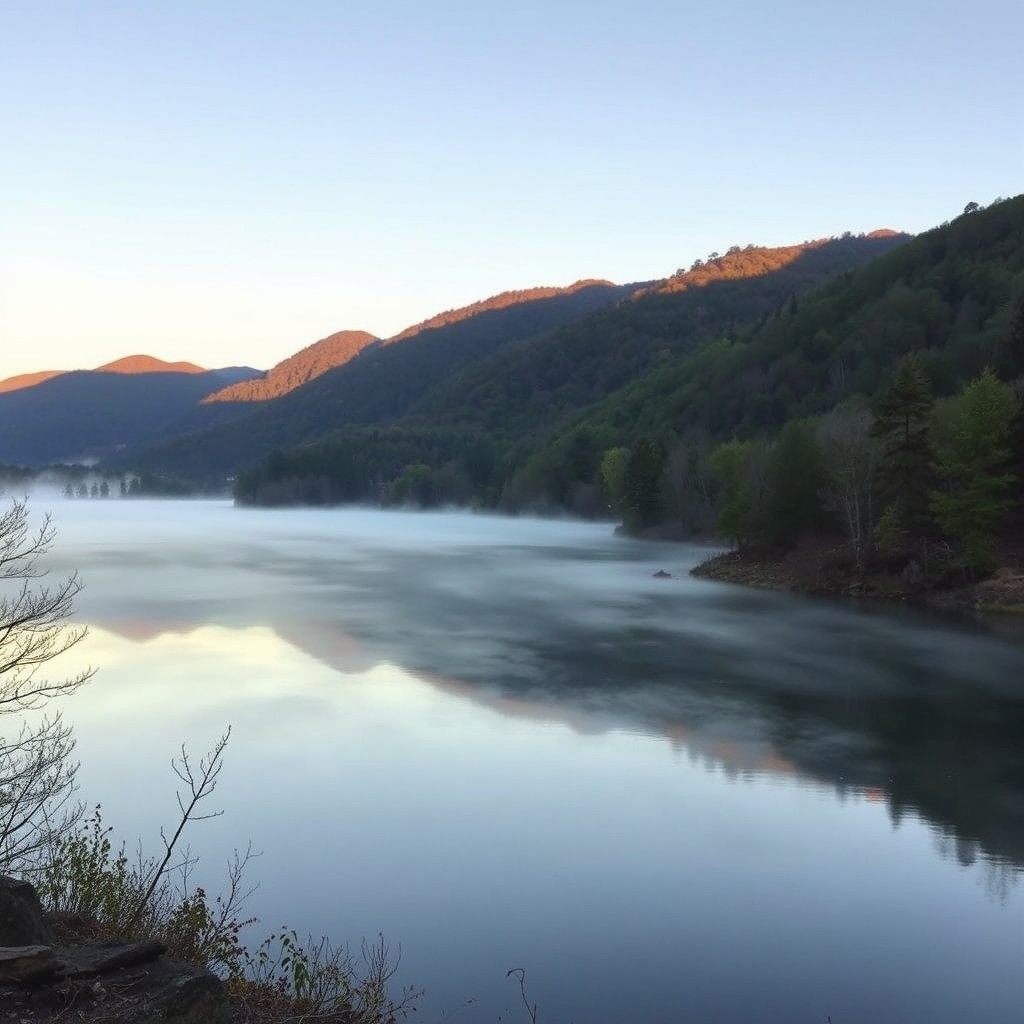
The Lake Goes to Glass Before the First Boat
The first thing you notice is the quiet. Before the first engine turns over — and on a weekday in May that can be eight or nine in the morning — the lake goes to glass. You hear water against the dock pilings, a heron working the shallows, an acorn dropping through the canopy on the steep lots. The light comes over the eastern ridges low and warm and lays flat across the surface. If you’ve ever wondered why people pay what they pay to be on this water, that hour is the answer, and no listing photo catches it.
Why I Tell Buyers to Walk a Property at Different Times of The Day
Orientation is everything on this lake, and you can’t read it at noon. A dock facing east takes the morning sun full-on — good for coffee on the water, warm by ten, shaded and cool by mid-afternoon. A west-facing dock does the opposite: still and shaded at dawn, then bright and hot into the evening. Neither’s better. But they’re very different ways to live, and the only way to know which one a property gives you is to stand on the dock while the sun’s actually doing it.

Morning tells the truth about a lot in other ways a midday tour hides. Where the fog lingers longest is usually where cool air drains and settles — handy to know before you plant a garden or count on a screened porch being comfortable in the shoulder seasons. A cove that stays glassy and protected at dawn tends to stay calmer in an afternoon wind too, which matters if you’re keeping a boat or a kayak. None of that shows up in square footage. All of it shows up at seven in the morning.
Every Season Has Its Own Morning
The morning changes with the season, and that’s its own kind of education. A June dawn is soft and humid, the fog thick and slow to lift. By October, the air’s sharper, the fog thinner and quicker off the water, and the ridgelines are turning color while you stand there. Winter mornings are the most underrated of all — cold, clear, almost nobody out, the kind of stillness that tells a serious buyer exactly what the off-season feels like. I’ve had buyers decide on the strength of one February morning.
In 33 years of helping buyers and sellers here, I’ve found the buyers who fall hardest for Lake Lure are almost always the ones who happened to catch it early — fog on the coves, the ridges taking first light, the water like a held breath. It’s no sales trick. It’s just the lake being honest about itself before the day gets busy.
If mornings like that sound like what you’re looking for, I’m happy to talk it through. I know every part of this lake, and I’ll help you find the spot that fits the way you want to live here. Get in touch when you’re ready.