

When somebody calls me about a lakefront listing they found online, I slow them down with one question before anything else: do you want to look at the water, or do you want to put a boat in it from your property? In a lot of the country, that sounds like the same question. In Lake Lure, it’s not even close. The difference between a lake-view lot and a true lakefront parcel with dock rights can run two or three hundred thousand dollars on two pieces of land that photograph almost exactly alike.
Here’s the part out-of-state buyers don’t see coming. Lake Lure is a managed lake — the Town of Lake Lure controls the shoreline and every dock permit on the water. It was built back in 1927 as a resort lake, and the shoreline was deliberately platted, lot by lot, with different rights on different parcels. So access isn’t a word an agent gets to sprinkle on a listing to dress it up. It either comes with the deed or it doesn’t. I’ve been helping people buy and sell on this lake since 1993 — long enough to have watched a buyer wire earnest money on a “lake property” and learn later they’d bought a fine view and no legal way to touch the water. I’d rather you not be that buyer.
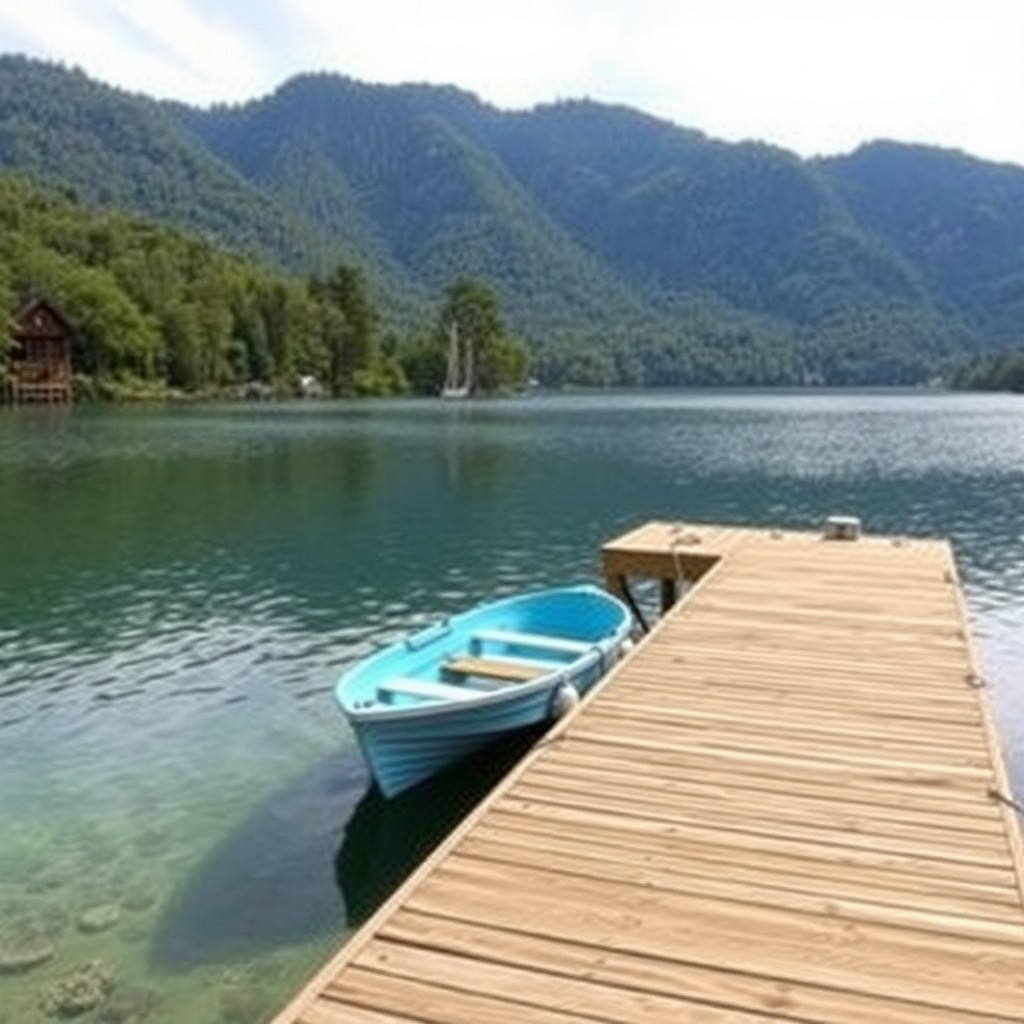
Three Different Things People Call Lakefront
In my 33years here, I’ve learned to sort every waterfront listing into three buckets before I ever unlock the door. The first is true lakefront with dock rights. Your land runs down to the water, and you’ve either got a permitted dock already or the legal right to apply for one through the town. That’s the top of the market and the smallest slice of inventory there is. Most of the good shoreline got spoken for decades ago and are a highly sought-after prize.
The second is deeded or community access. You don’t own the waterfront itself, but your deed or POA / HOA gives you a legal right to use it — a shared dock, an assigned slip, a community day-use spot down at the water. That can be a smart, sensible way onto the lake. The details just matter a great deal: how many homes share that slip, whether it transfers with the sale, who pays to keep it up. I read those documents myself before I let a buyer get attached.
The third is lake view only. You can see the water — sometimes a wide-open look straight across it — but there’s no legal access. No dock, no slip, no path to the shoreline. There’s nothing wrong with a view lot if that’s honestly what you’re after, and they cost a good bit less for a reason. The only trouble comes when a buyer assumes the view brings the water with it. It doesn’t.

Why the Price Gap Is So Big
Folks are always surprised by how far apart these three sit on price, and it really comes down to one thing: scarcity. They quit making new shoreline in 1927. Every foot of true lakefront out there is all there’s ever going to be, and the town’s dock permitting keeps it that way. A dock-rights parcel isn’t just selling you land — it’s selling you one of a fixed number of legal connections to the water, and that’s why it holds value the way it does. A view lot is competing with just about every other lot on the mountain that can see the lake, and there are plenty of those. Both can be wonderful places to call home. They’re simply not the same purchase, and you shouldn’t pay lakefront money for a lakefront view.
What to Check Before You Fall in Love
Here’s what I walk every buyer through before their heart gets ahead of them. Pull the deed and read exactly what rights convey — the listing language is sometimes a touch optimistic. If there’s a dock, confirm it’s permitted and that the permit transfers to you. If your access runs through a POA / HOA or a shared easement, get those documents and find out how many households share it and what the dues cover. And if the water matters to you at all, ask the one plain question that reorganizes a whole search: can I legally put a boat in this lake from this property today, without applying for anything?
If you’re not sure which category a property falls into — or whether the access situation on something you’re looking at is worth the price — drop me a line. I’ve been sorting through these distinctions for 33 years and I’ll give you a clear answer.